2026-11-08 · Lucas Bennett
How to Handle Burst Pipes During Nashville Winters
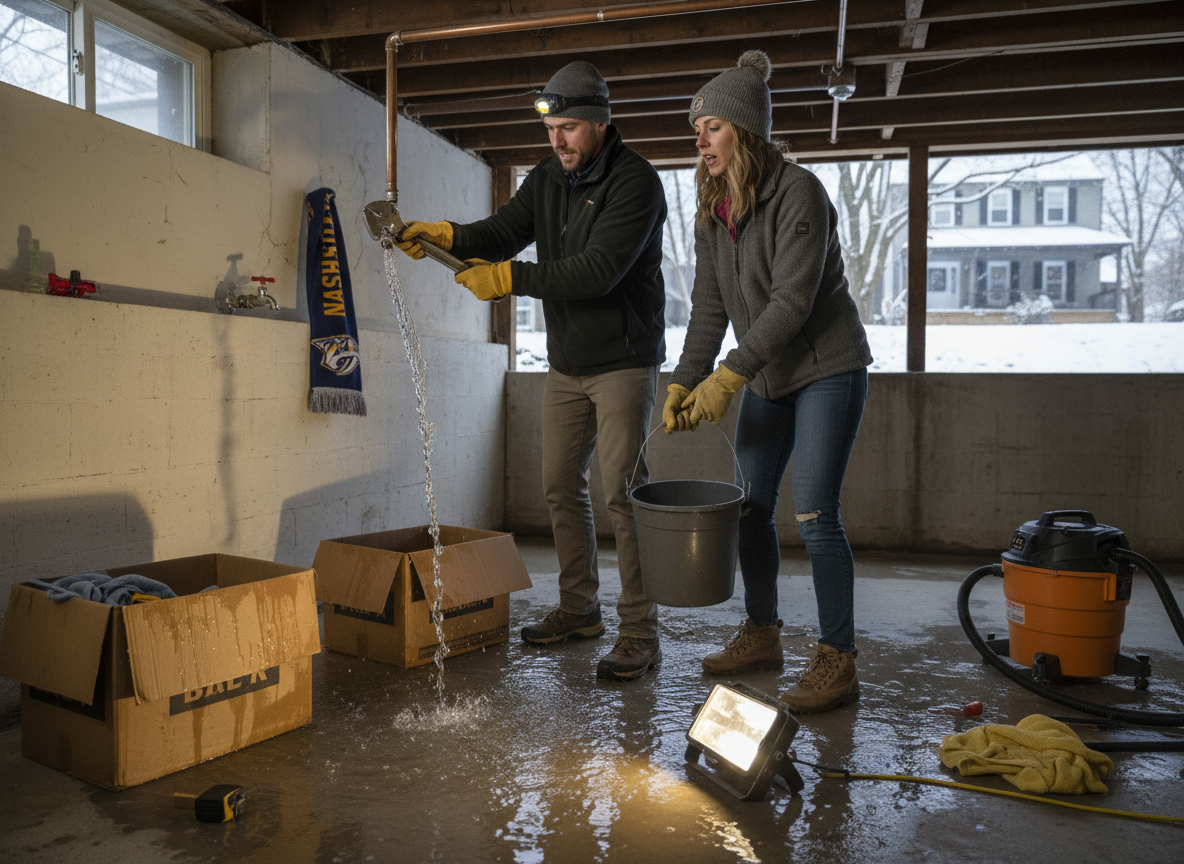
When pipes burst during Nashville winters, shut off the main water valve immediately, drain remaining lines, and contact a restoration team within the first hour to prevent widespread issues in homes built before 1970 across East Nashville and Germantown.
Why Pipes Burst in Cool Nashville Winters
Nashville's humid subtropical climate brings cool winters where temperatures often dip below freezing at night, expanding water in supply lines inside unheated crawl spaces and exterior walls. Older housing stock in Belle Meade and The Gulch features galvanized steel pipes that corrode over decades, making them brittle when ice forms. Terrain near the Cumberland River adds soil moisture that speeds pipe degradation in basements common to Donelson and West End properties. These conditions turn a small leak into a flood that saturates drywall and flooring within minutes. Homeowners in Green Hills see repeated issues because many 1950s-era homes lack proper insulation around plumbing runs. Understanding these local patterns helps target the most vulnerable spots before winter arrives.
Immediate Response Steps
Locate and close the main shutoff valve first, usually near the water meter on the street side or inside a utility closet. Open all faucets to relieve pressure and allow ice to thaw slowly. Move furniture and belongings away from affected walls and floors to limit secondary damage. Document the scene with photos for insurance purposes while avoiding electrical outlets near standing water. In Davidson County homes, water can travel quickly through hardwood floors common in Downtown and Germantown, reaching lower levels in under 30 minutes. Avoid using household fans until a professional assesses moisture levels, as improper drying can push water deeper into subfloors.
Prevention Measures for Local Homes
Insulate exposed pipes in attics, crawl spaces, and garages with foam sleeves rated for 40-degree drops. Keep cabinet doors open under sinks during cold snaps to allow warm air circulation around plumbing. Maintain indoor temperatures above 55 degrees even when away, especially in Belle Meade properties with large window exposures. Replace aging supply lines during renovations, focusing on runs near exterior walls in East Nashville bungalows. Check water pressure regularly, as spikes above 80 psi stress joints in older Germantown homes. These steps reduce burst risk without requiring major retrofits.
After initial control, professional Water Damage Restoration becomes essential to extract hidden moisture and prevent mold in Nashville's humid air. Water Damage Restoration teams use industrial equipment suited to local conditions.
When to Bring in Experts
Call for help once water is stopped if saturation affects more than one room or reaches electrical systems. Technicians assess moisture with meters that detect levels behind drywall in West End and Green Hills homes where visual signs lag. They remove standing water, dry structural materials, and monitor humidity to stay below 60 percent. Delaying this step in Davidson County often leads to secondary issues because of the region's moisture retention. Water Damage Repair follows extraction to restore flooring and walls to pre-loss condition.
For costs after similar events, review What Nashville Homeowners Pay for Water Damage Restoration After Spring Storms. After winter bursts, watch humidity closely and read Preventing Mold Growth After Basement Flooding in Nashville's Humid Summers for ongoing care.